Applied AI systems
Knowledge assistants, document processing and AI-supported workflows. Connected to your business data, with clear boundaries and human review where it matters.
Built around the way you work
We specialise in custom software and applied AI.
Built into your processes, connected to your systems and useful to your people.
What we build
When your business has its own way of working, your software should support it. We connect the people, processes and systems that keep things moving.
Knowledge assistants, document processing and AI-supported workflows. Connected to your business data, with clear boundaries and human review where it matters.
Operational workspaces, approval flows and internal tools built around your team’s responsibilities. Clear information, fewer disconnected steps.
A shared place to place orders, manage requests, exchange documents or check progress. The right information for each person who needs it.
Connect existing platforms and take repetitive handovers out of the workflow. Move data once, validate it and make exceptions visible.
Replace the parts that hold you back while preserving the workflows that work. Plan migrations in stages, with testing and a route back.
AI engineering
We specialise in turning AI capabilities into useful business software. The starting point is a task your team needs to complete, the information it depends on and the decisions people should keep.
AI prepares. Your team decides.
Missing details and uncertain outputs go to a person before an approved record reaches your business system.
We define the task, test against representative examples and agree how quality will be reviewed before rollout.
Discuss an AI projectCase studies / project scenarios
Six illustrative project briefs, grounded in published work. Each explores a practical challenge, a proposed solution and the checks needed before launch.
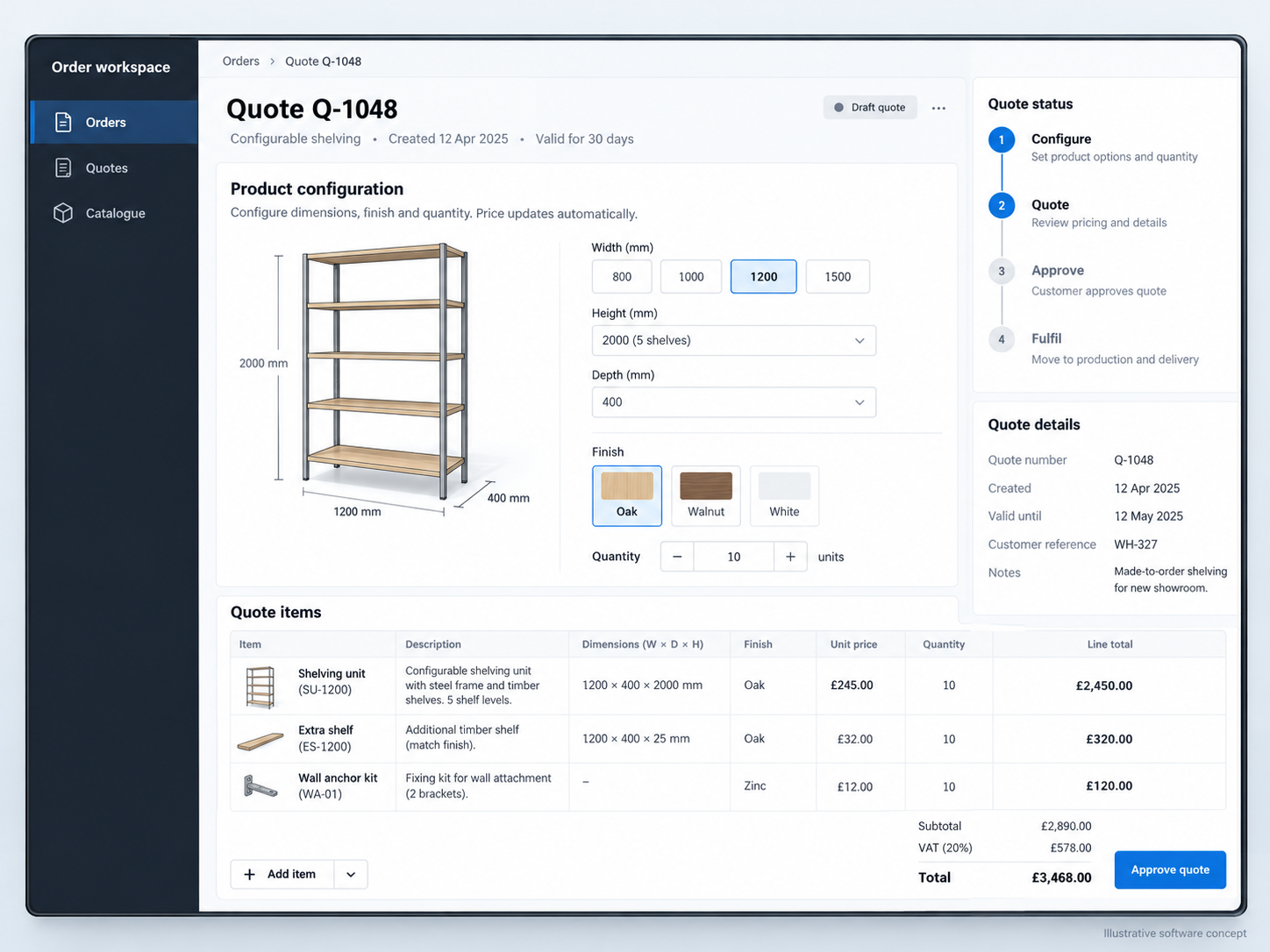
Design objectiveOne traceable order record, with less re-keying between teams.
“Our sales and fulfilment teams could work from the same order record, even when a customer changed the specification.”
For a specialist retailer, a quote passes through sales, production and fulfilment before anything ships. Product options, revised prices and delivery notes can end up scattered across spreadsheets and email threads.
A browser-based ordering workspace would validate product combinations, calculate prices from an agreed rule set and turn an approved quote into a structured order. A shared status record would keep sales and fulfilment working from the same information.
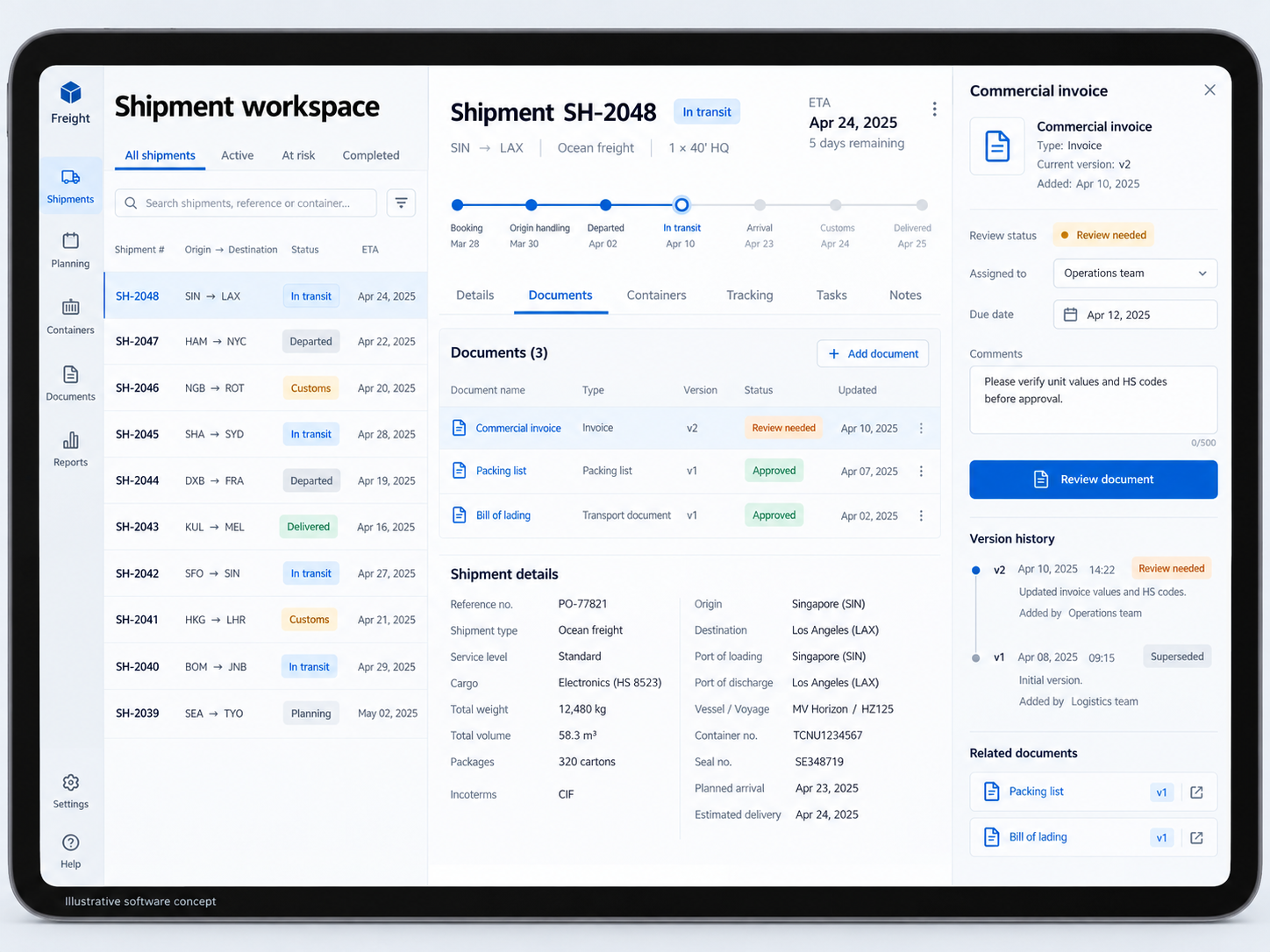
Design objectiveClear ownership of the next action before each handover.
“The useful change was knowing which document needed attention and who owned the next step.”
A freight coordinator depends on shippers, agents and carriers. A missing document or an outdated attachment can hold up a handover, while the team has little visibility into who needs to act next.
A shared shipment workspace would organise required documents by shipment and route, record version history and assign outstanding actions to the right role. Carrier events and internal updates would appear in one operational timeline.
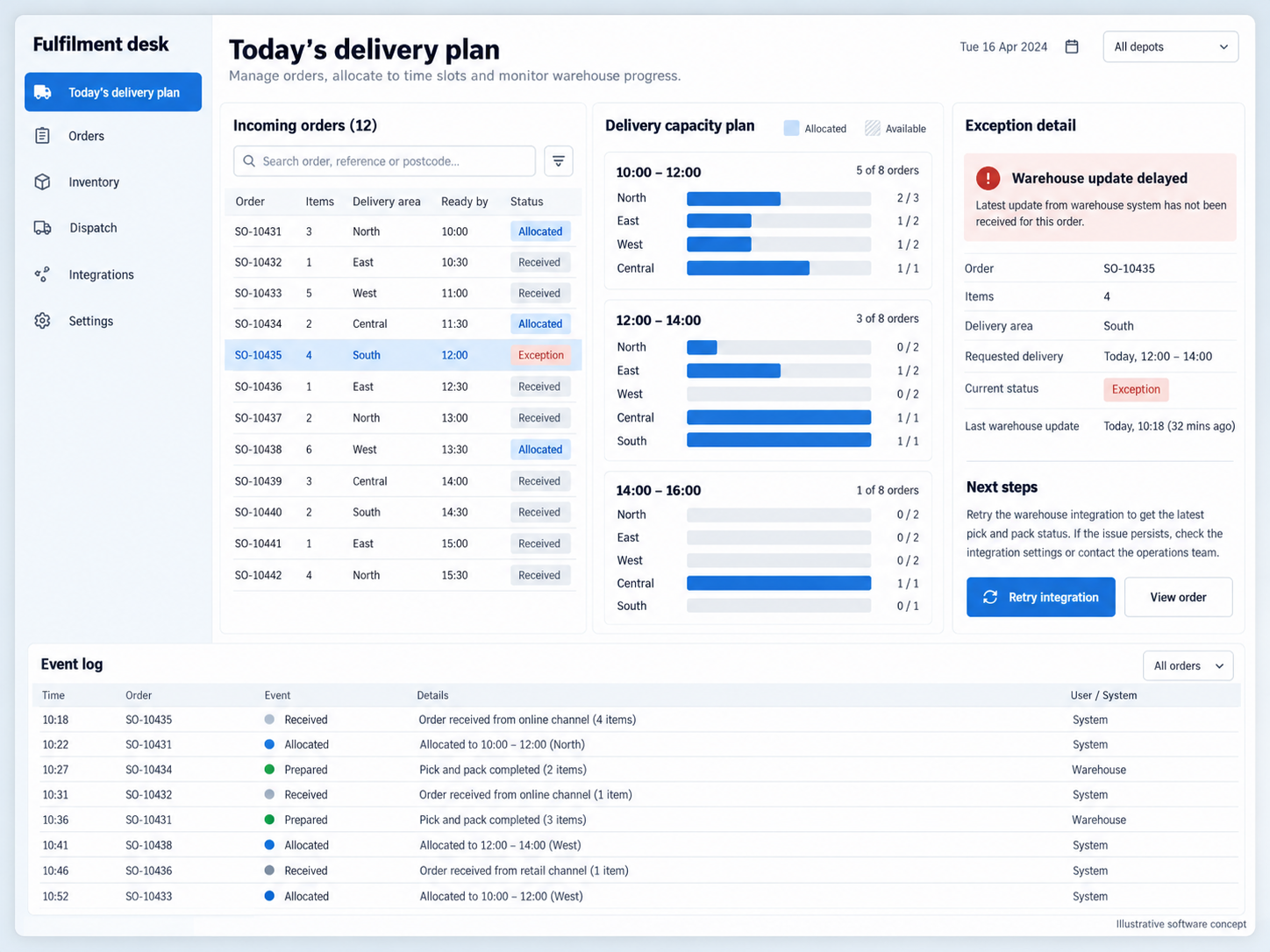
Design objectiveDelivery choices that reflect the operation behind them.
“Delivery availability could reflect what the operation could actually prepare. That gave the team a clearer basis for decisions.”
When an online business expands, customer orders and warehouse capacity can drift out of step. Teams need to know what can be fulfilled, which exceptions need attention and what a customer can reasonably be promised.
An integration layer would bring order and fulfilment events into a consistent model. An operations workspace would surface exceptions, while delivery availability would reflect agreed capacity rules. The first release would focus on one fulfilment flow before wider rollout.
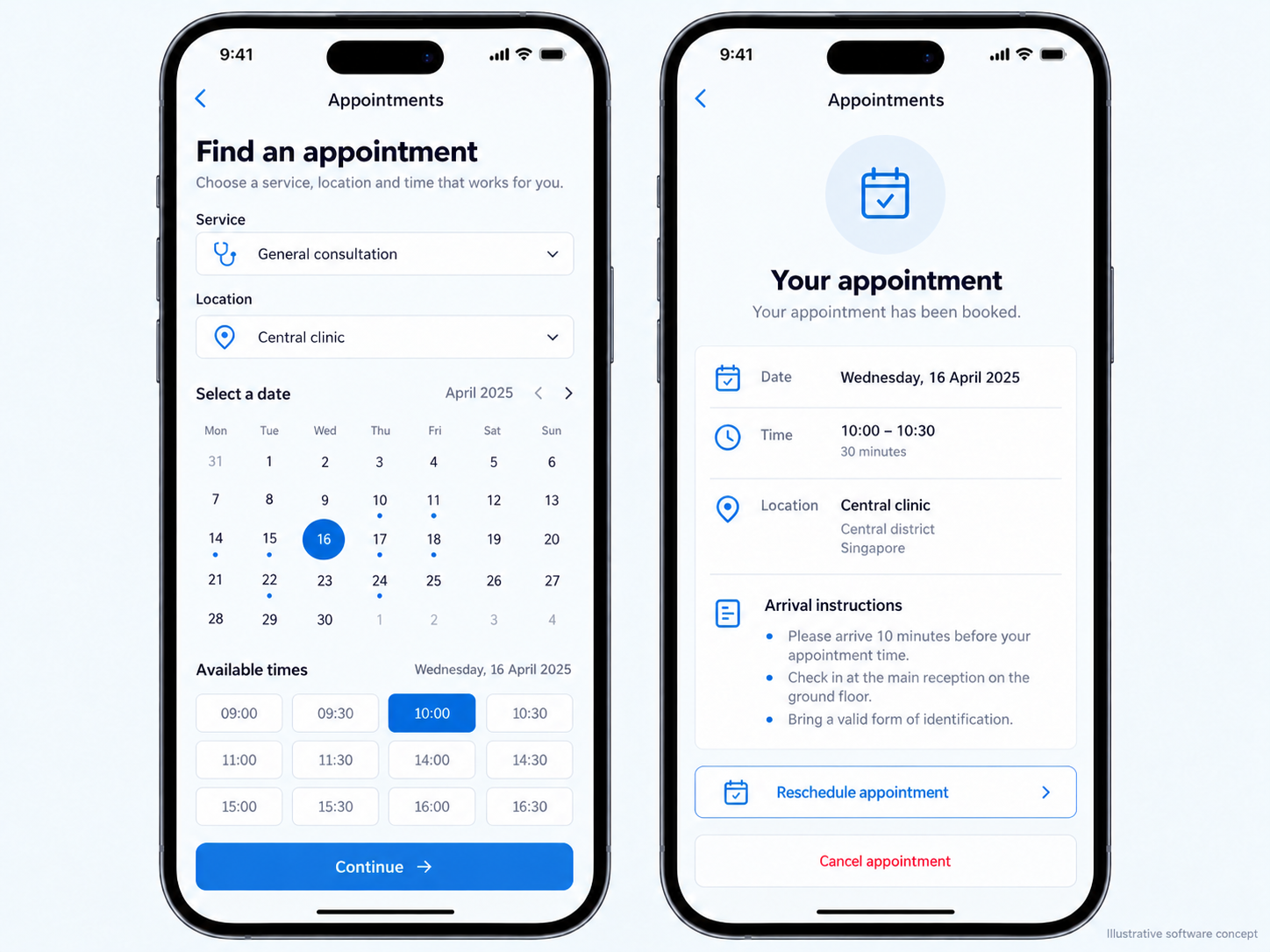
Design objectiveA consistent booking record for patients and administrators.
“Patients could manage a change themselves, while the team had one consistent appointment record.”
A clinic group manages appointments across locations, practitioners and services. Phone requests and schedule changes can leave administrators reconciling multiple calendars while patients wait for confirmation.
A patient-facing booking flow would use verified availability and consistent rescheduling rules. The administrative workspace would show tasks that need a person, with access separated by role. The initial scope would cover scheduling and administration rather than clinical decision-making.
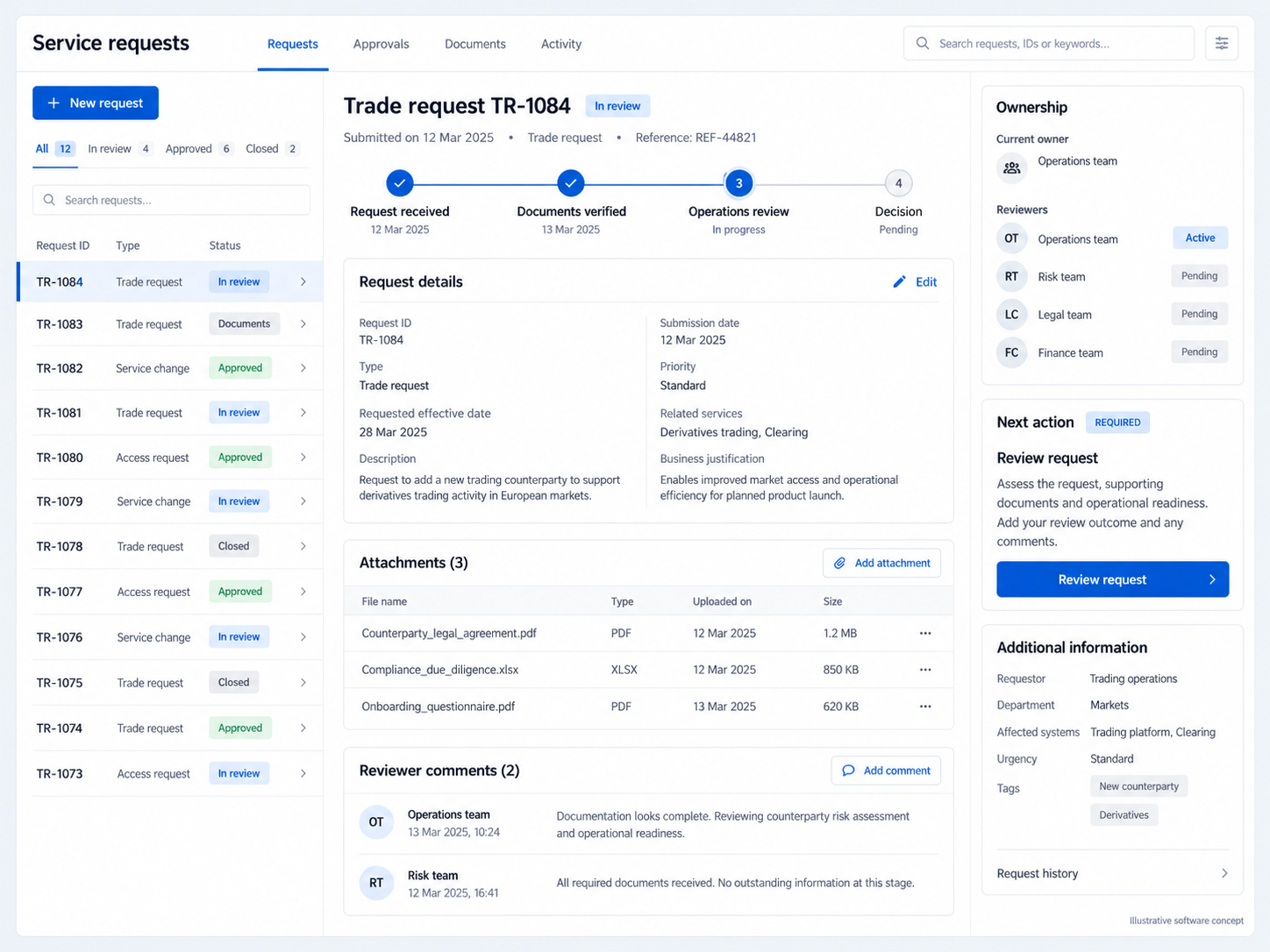
Design objectiveA clear route from application to decision, with one shared status.
“We could follow a request from the original information through each review, without asking everyone for another update.”
A trade-services team depends on several organisations to complete one request. Different forms, duplicate data entry and unclear approval status create extra work for applicants and operators.
A single request workspace would collect information once, route it through the agreed approval steps and show who needs to act. Integrations would carry status changes between existing systems, while an audit trail would preserve each decision.
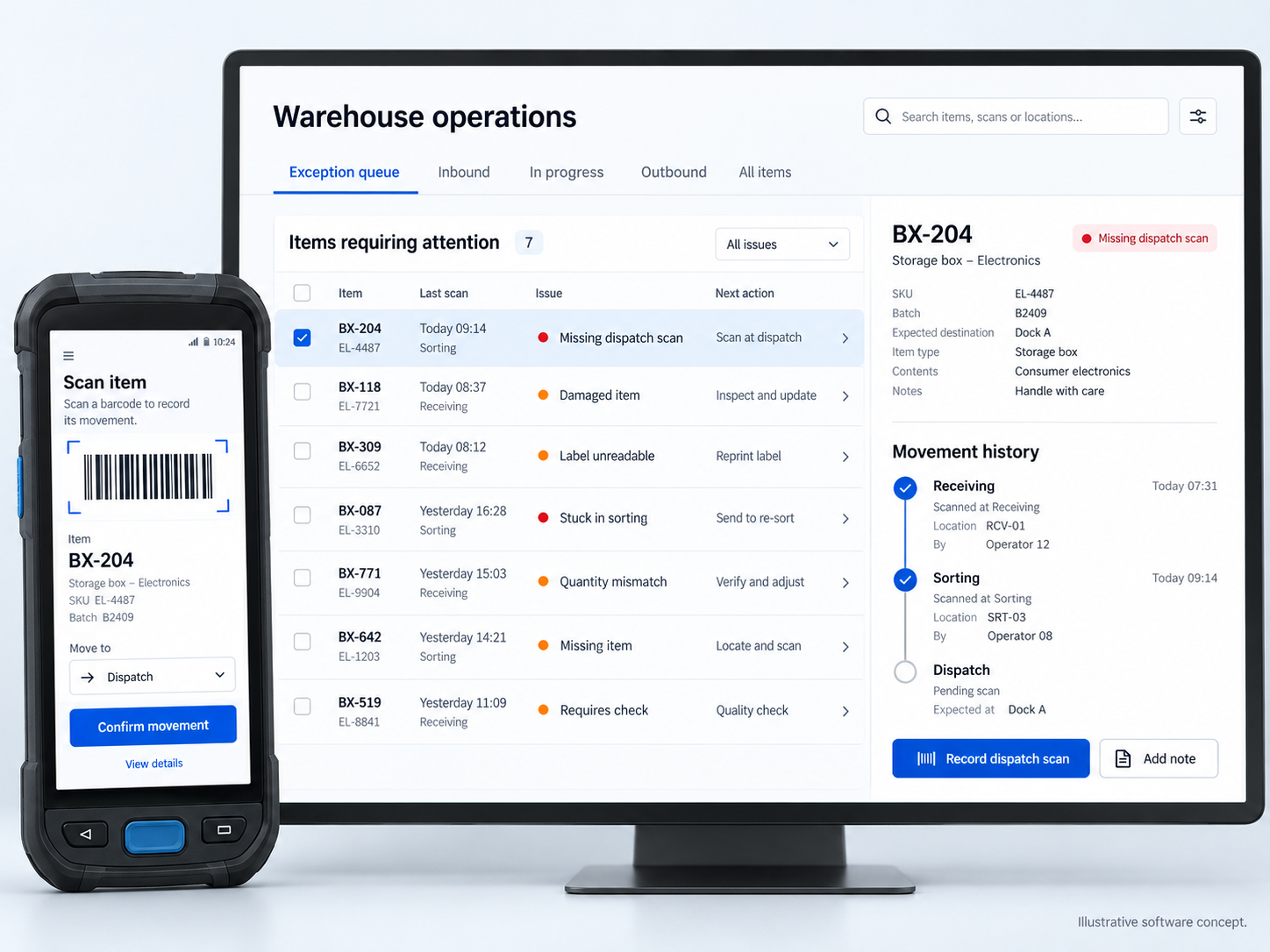
Design objectiveTraceable item movement and fewer unresolved handovers.
“The next shift could see the item history and the action still needed, rather than reconstructing the story.”
A distribution operation tracks goods between receiving, sorting and dispatch. Missed scans and special-handling items become hard to follow when operators work across separate tools or rely on verbal handovers.
A warehouse event layer would turn scans and system updates into a consistent item history. An operator workspace would prioritise exceptions and show the next permitted action. A handover view would make unresolved work visible to the next shift.
How we work
You stay involved in the decisions that shape the product. We turn each agreed step into something you can inspect, try and improve.
Tell us where you want to startWe talk to the people doing the job, map the current workflow and identify the systems it depends on. Together, we define the problem and what a useful first release must achieve.
You get: a focused scope and acceptance criteria.We turn the most important journey into a prototype. Your team can test the language, sequence and decisions before development turns assumptions into expensive changes.
You get: a prototype and agreed technical direction.We develop in focused increments and demonstrate working software regularly. Integrations, access rules and exception handling are part of the build. For AI features, we test representative examples and review the outputs with your team.
You get: reviewable releases and visible progress.We test the complete workflow with representative data, prepare the rollout and document how the system runs. Training, monitoring and ongoing support are agreed as part of the handover.
You get: a tested release, documentation and a support plan.Start a conversation
Tell us about the process, product or AI opportunity you want to explore. A short description is enough to begin.
We review your enquiry and reply using the email address you provide. The first conversation is about your business, the challenge and the next useful step.